

Blog Post
The Physics of Double-Wall Construction: Air Cushions and Impact Dissipation
When sensitive equipment, medical instruments, or high-precision industrial tools undergo transportation, they face extreme mechanical stress from drops, vibrations, and sudden impacts. The manufacturing technique known as blow molding makes it possible to engineer specialized cases that mitigate these destructive kinetic forces through advanced geometry.
By leveraging double-wall construction, industrial engineers utilize trapped air and structural polymer behavior to convert high-peak forces into manageable, slow-release thermal and elastic responses.
Understanding the physics behind double-wall protection reveals how material selection, pneumatic dampening, and structural dynamics intersect to safeguard critical equipment.
The Mechanics of Impact Force and Energy Transfer
To understand how double-wall cases protect sensitive gear, it helps to look at what happens during a sudden drop or bump. When a case hits a hard surface, its motion stops almost instantly. To lessen the impact on the equipment inside, the case must spread that force out over a longer moment in time.
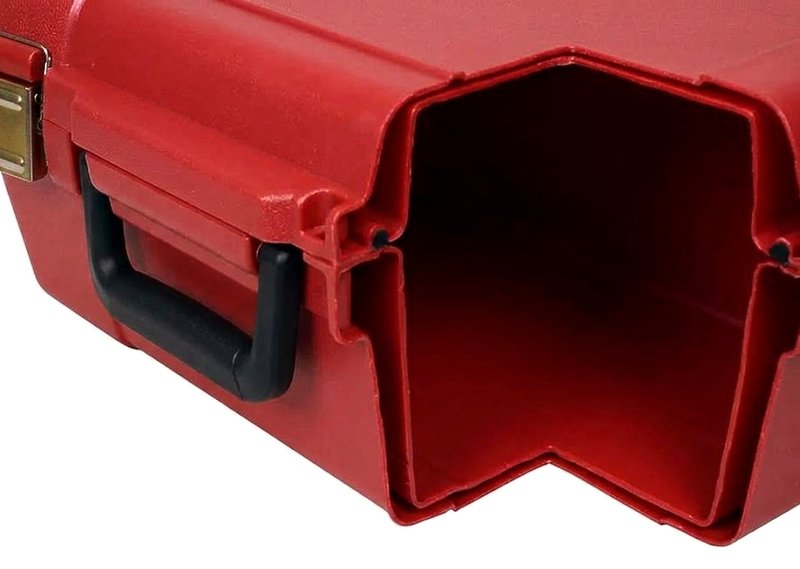
Single-wall containers rely mostly on the natural flexibility of the plastic to absorb shocks. During a hard fall, a single plastic wall bends quickly until it reaches its limit, passing intense shocks straight to the internal padding and payload.
Double-wall construction works differently. By placing an outer shell and an inner shell around a trapped pocket of air, it creates two separate protective barriers that cushion the impact in stages.
Pneumatic Cushioning and Compression Dynamics
The air pocket sealed between the inner and outer walls acts as a dynamic pneumatic shock absorber. During a localized impact, the following physics sequence occurs:
- Initial Outer Wall Deflection: The kinetic energy of the impact forces the outer wall inward, rapidly altering the volume of the internal air cavity.
- Dynamic Compression: As the cavity volume decreases, the internal air pressure increases non-linearly. This pressurized air resists further rapid deformation, acting as a pneumatic spring that distributes localized stress across the entire surface area of the cavity.
- Pneumatic Dampening: Rather than allowing the impact energy to transfer at a single concentrated point on the inner wall, the compressed air pocket redistributes the load laterally.
- Delayed Force Propagation: The energy transfer to the inner wall is delayed in time and reduced in magnitude, smoothing out the acceleration curve experienced by the protected equipment.
Modern blow molding capabilities allow manufacturers to control wall thickness, cavity volume, and corner radii precisely, tuning this pneumatic response to specific shock thresholds.
Structural Geometry and Strain Energy Dissipation
Beyond pneumatic forces, the structural geometry of double-wall designs manages strain energy through material deflection. Polymer materials like High-Density Polyethylene (HDPE) exhibit viscoelastic properties, meaning they display both elastic (recoverable) and viscous (energy-dissipating) characteristics under deformation. Essential geometric features that refine this physical response include:
- Tack-Off Points (Internal Ribbing): Internal connection points where the inner and outer walls meet create structural columns. These features act as load-bearing struts that resist crushing forces while maintaining structural integrity.
- Corner Radius Engineering: Sharp angles concentrate stress, causing rapid structural failure. Double-wall designs incorporate generous outer radii that convert direct compressive force into bending and shear stress across adjacent panels.
- Controlled Flexure: The double-layer profile functions similarly to an I-beam in structural engineering. The outer skin absorbs tensile and compressive stresses, while the inner skin provides structural support, preventing catastrophic puncture failures.
Through refined blow molding manufacturing processes, these structural walls maintain consistent thickness and material density, ensuring predictable mechanical behavior under repeat impacts.
Comparative Mechanical Performance
Comparing single-wall and double-wall protective structures highlights the physical advantages of dual-layer systems:
| Performance Metric | Single-Wall Construction | Double-Wall Construction | Physical Mechanism |
|---|---|---|---|
| Peak Acceleration (G-Force) | High peak spikes | Broad, flattened curve | Extended deceleration time |
| Puncture Resistance | Dependent on material thickness | Dual-barrier defense | Outer skin absorbs breach; inner skin remains intact |
| Thermal Insulation | High heat transfer rate | Trapped air barrier | Low thermal conductivity of static air pocket |
| Structural Stiffness | Requires heavy external ribbing | High strength-to-weight ratio | Hollow structural section dynamics |
By utilizing double-wall geometry, engineers achieve higher impact protection without adding excessive dead weight to the enclosure.
Thermal Stabilization and Environmental Resistance
An additional benefit of double-wall physics involves thermodynamics. Thermal fluctuations can compromise sensitive electronics and calibration tools through expansion, contraction, or humidity condensation.
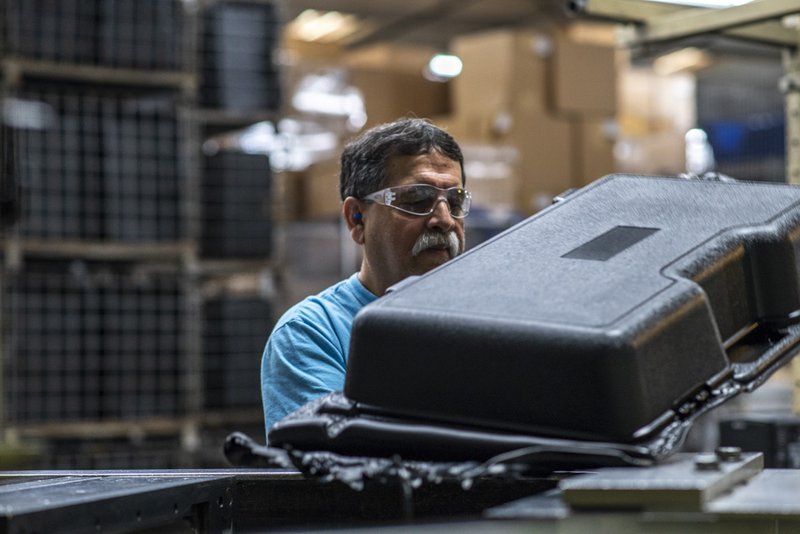
Static air possesses exceptionally low thermal conductivity. The sealed cavity formed during custom blow molding acts as an effective thermal insulator. This air gap reduces heat conduction and convection between the external environment and the internal chamber, protecting contents from rapid temperature spikes during field transit.
Engineering Custom Protective Solutions with PFC
Understanding the physics of impact dissipation is central to designing enclosures that survive extreme field conditions. At The Plastic Forming Company, every case we produce is manufactured entirely in-house, from engineering and mold design to final assembly.
We have been refining our blow molding process since 1966. By mastering advanced blow molding techniques, our durable, lightweight, and impact-resistant carrying cases are suitable for industrial, medical, military, and commercial applications. Every PFC case leverages engineered double-wall physics to provide superior shock absorption, thermal resistance, and long-term structural integrity.
Unlike add-on inserts, our custom molded interiors are directly built into the case during fabrication. This integrated design lowers tooling expenses relative to full-custom molds while providing an exact fit for your equipment.
Connect with our technical design team to develop a custom double-wall packaging solution customized for your critical equipment.