
Uncategorized
5 Questions to Ask Before Choosing a Custom Case Manufacturer
Sourcing high-quality custom cases is a critical operational decision that directly impacts how buyers evaluate your final equipment. A case cradles your costly hardware, displays your corporate brand, and protects delicate technology in rugged operational environments. Selecting an incompatible manufacturing partner leads to delayed delivery schedules, unexpected capital expenditures, and compromised quality control.
OEM engineering and procurement teams can eliminate most vendor risk early in the procurement cycle. Asking five targeted questions reveals whether a manufacturer possesses the technical capabilities, supply chain security, and quality controls necessary to execute your project seamlessly.
1. Where Are Custom Cases Manufactured?
Establishing the exact location of primary manufacturing operations provides critical visibility into your supply chain risk. Ask where the plastic molding occurs, where the foam converting takes place, and where workers execute final assembly.
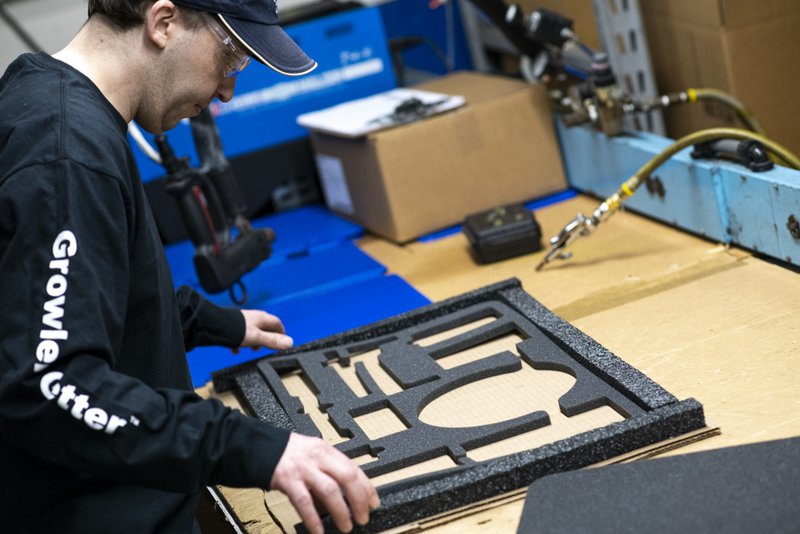
Suppliers that outsource fabrication to third-party vendors introduce unnecessary handoffs, increasing lead times and quality variances. Overseas manufacturing introduces additional vulnerabilities, including long transit windows, port disruptions, and communication delays caused by time zone differences. Single-site domestic production offers distinct operational advantages:
- Agile Engineering Changes. Onshore engineering teams process mid-program design revisions in days rather than weeks.
- Single-Point Accountability. Keeping molding, foam fabrication, and secondary assembly under one roof eliminates vendor finger-pointing.
- Predictable Material Supply. Domestically sourced plastic and technical foam arrive on predictable schedules, protecting your downstream assembly timelines.
2. Who Holds Tooling Ownership, and How Are Mold Costs Managed?
Tooling usually represents the single largest capital expense in a new protective enclosure program. You must clarify legal ownership of the mold upfront and obtain written terms regarding title transfer or volume-based tooling amortization.
In many applications, spending tens of thousands of dollars on full custom injection molds is unnecessary. Blow-molded high-density polyethylene provides robust structural integrity while accepting modified component inserts. Pairing established base tooling with customized mold inserts delivers a distinctive, tailored enclosure while reducing capital expenditure by 80 to 90% compared to dedicated tooling.
Your interior integration strategy also dictates program costs:
- Molded Interiors. Molded-in cavities form concurrently with the outer shell, creating a monolithic, durable structure without separate interior fabrication steps. Double-wall blow molding also offers exceptional impact absorption.
- Fabricated Foam Interiors. Precision-cut, multi-density technical foam offers excellent impact absorption for complex electronics without initial tooling costs, though unit costs remain higher across large production volumes.
3. How Rapidly Can the Supplier Deliver a Verified Functional Prototype?
The turnaround time for a first-article prototype indicates how efficiently a case manufacturer operates internally. Extended prototyping cycles often signal off-site engineering or fragmented production teams.
Before committing to a production contract, demand precise answers to these functional requirements for your custom cases:
- What is the timeline from the approved CAD file to a physical first-article sample?
- Are complete design services and iterative revisions included in the initial proposal?
- What CAD file formats or physical product samples must our team supply?
- How many design iteration rounds occur before final production sign-off?
- Does the supplier offer stock enclosure dimensions to bridge product launch gaps while custom tooling is fabricated?
Utilizing off-the-shelf outer dimensions during the tooling build allows OEMs to hit target market launch dates without sacrificing protection.
4. What Quality Documentation and Minimum Order Quantities apply?
Claims regarding durability and tolerance require rigorous documentation. Qualified case manufacturers readily supply technical specification sheets covering resin grades, wall thickness uniformity, hardware strength ratings, and environmental compliance data.
Similarly, clear minimum order quantity (MOQ) structures prevent unexpected financial surprises during the purchasing phase. You should require clear threshold definitions across all program tiers:
- Stock enclosure sizes available with zero minimum order quantities
- Volume thresholds required for engineered technical foam or custom molded interiors
- Annual volume commitments versus per-order production minimums
- Cost tiering differences between initial production runs and subsequent reorders
Addressing these operational parameters upfront protects your program's budget and ensures inventory flexibility over the long product lifecycle.
5. Does the Manufacturer Control Every Step of the In-House Process?
When evaluated against these criteria, The Plastic Forming Company (PFC) stands out as an ideal manufacturing partner for demanding OEM applications. PFC has engineered and molded protective enclosures in the USA since 1966. By managing design, tooling, blow molding, foam customization, and final assembly entirely within company-owned domestic facilities, PFC maintains absolute quality control over every order of custom cases.
PFC specializes in blow-molded double-wall construction that delivers exceptional impact resistance and structural rigidity.
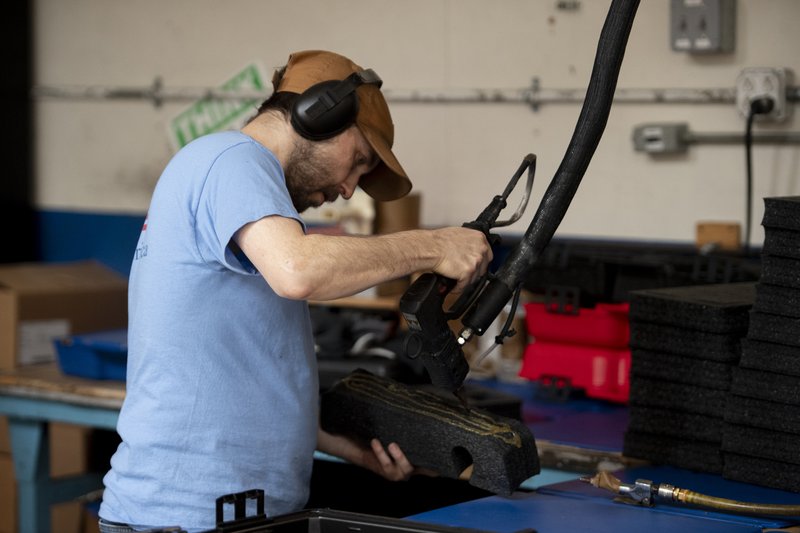
For interior protection, PFC engineers multi-density foam solutions tailored to delicate hardware or creates integrated, single-piece molded interiors that eliminate extra assembly costs. For low-volume programs or immediate market entry, PFC provides stock enclosures and AllConditions Cases with zero minimum order quantity requirements.
Streamline Your Protective Custom Cases Program
Selecting the right hard case partner ensures your equipment remains protected in the field while preserving your operational timelines and program budgets. PFC offers the domestic infrastructure, blow-molding expertise, and flexible tooling strategies required to deliver high-performance custom cases tailored to your exact technical specifications.
Contact the engineering team at PFC today to review your CAD models, evaluate tooling options, and receive a complete project estimate for your next protective case project.