

Blog Post
Below Zero Without Brittleness: How HDPE Maintains Impact Strength in Freezing Climates
For Original Equipment Manufacturers (OEMs) designing rugged hardware, specifying a high-performance hard case is critical to ensuring your product survives harsh winter environments intact. Field crews operating in sub-zero climates pull sensitive instruments, diagnostic equipment, and specialized machinery from truck beds in extreme conditions. If a protective enclosure fails, the damage impacts not only the internal componentry but also your brand’s reputation for reliability.
When a case splits upon impact on a frozen loading dock, the root cause is rarely structural design alone; it is fundamental polymer degradation caused by low temperatures. Understanding how materials behave under thermal stress allows OEMs to make informed engineering choices that guarantee field reliability year-round.
The Chemistry of Cold-Weather Polymer Failure
Every plastic material exhibits a temperature threshold known as the ductile-to-brittle transition. Above this critical range, polymer chains within the material retain sufficient mobility. When the exterior of a hard case receives a sharp impact, these molecular chains slide past one another, stretching to absorb and dissipate kinetic energy across the structure.
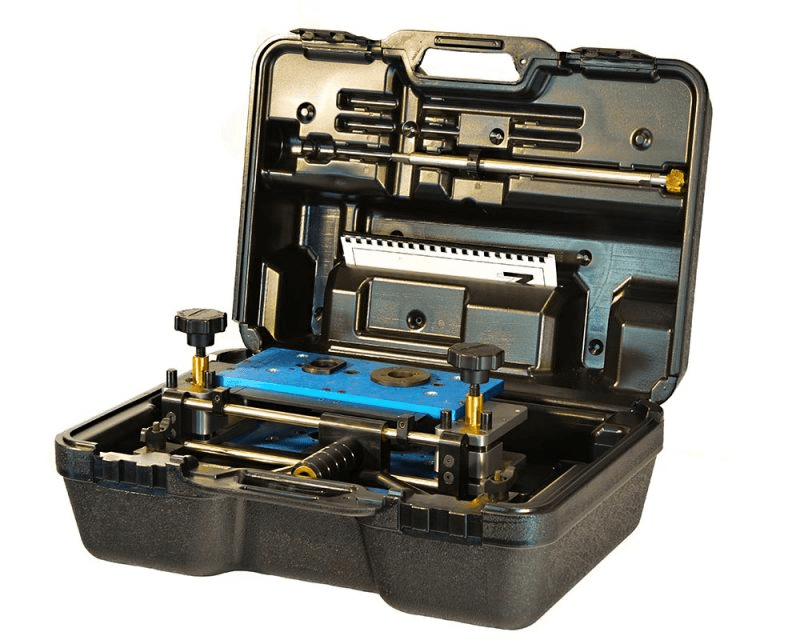
Once environmental temperatures fall below this transition threshold, molecular movement decelerates dramatically:
- Polypropylene Homopolymers experience severe loss of impact strength near 32°F (0°C).
- Polystyrene & Standard ABS lose structural toughness near ambient room temperature, rendering them unsuitable for low-temperature shock resistance.
A protective unit molded from standard thermoplastics may pass rigorous lab drop testing at 70°F, yet shatter under identical force at -20°F. When molecular mobility drops, kinetic energy from an impact cannot migrate through the structure.
Instead, the force concentrates at microscopic stress points, causing immediate crack initiation and rapid fracture propagation through the shell. For OEMs, evaluating the exact thermal limits of enclosure materials is just as vital as calculating static load capacities.
Why HDPE Retains High Energy Absorption Below Zero
High-Density Polyethylene (HDPE) operates in a distinct performance class regarding thermal stability. Because HDPE exhibits a glass transition temperature near -148°F (-100°C), far below any operational environment, its molecular structure remains ductile through extreme sub-zero conditions.
Several primary material characteristics explain how an HDPE hard case maintains superior impact resistance in freezing climates:
- Semi-Crystalline Molecular Architecture. HDPE balances highly ordered crystalline regions (which provide geometric rigidity and tensile strength) with amorphous regions (which allow flexible molecular movement). This dual-phase structure maintains shock absorption even in deep sub-zero air.
- Exceptionally Low Notch Sensitivity. Daily field use introduces surface scratches, scuffs, and abrasions. In brittle polymers, these surface imperfections act as stress risers that initiate catastrophic splits. HDPE resists crack propagation from surface defects under load.
- Controlled Ductile Yielding. While deep cold increases overall material stiffness, HDPE retains its elastic memory. Under sudden impact, the material temporarily deforms to absorb load forces and recovers its original shape without cracking.
- Blow-Molded Geometry Benefits. Blow-molding HDPE yields seamless, double-wall configurations with uniform wall thickness and rounded corner radii. The resulting air gap between inner and outer walls acts as a structural cushion, dampening impact energy before it reaches interior payloads.
Industrial-Grade Cold Protection Engineering
Selecting the proper protective enclosure requires evaluating material formulations, structural engineering, interior fitment, and hardware resilience as a unified system. Fabricating a customized hard case designed for extreme thermal ranges ensures your field equipment remains fully operational regardless of weather conditions.
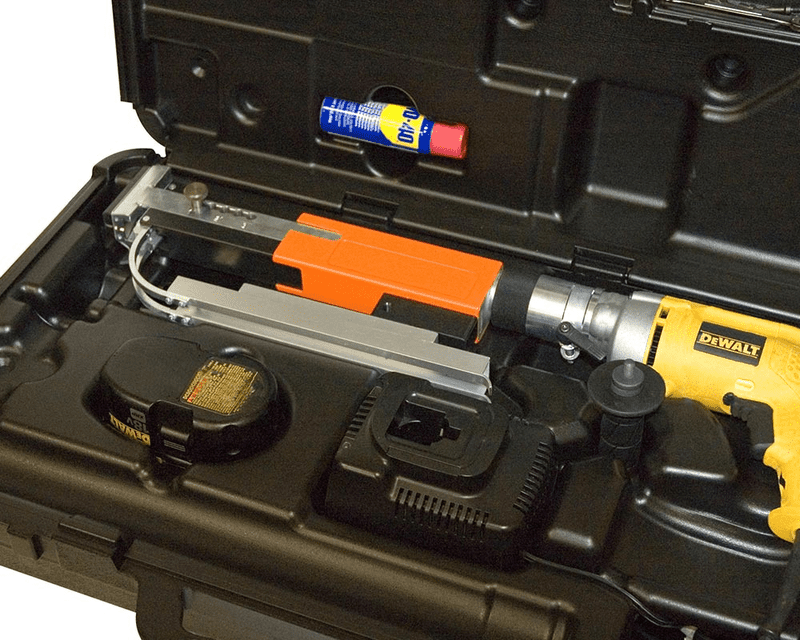
Key engineering considerations for winter-ready OEM enclosures include:
- Integrated Double-Wall Molding. Monolithic double-wall blow molding creates an insulated structural barrier that mitigates shock loading and external thermal swings simultaneously.
- Graduated Custom Foam Engineering. Interior foam matrixes should utilize multi-density, closed-cell polyolefin or polyethylene foams. Layering foam densities ensures progressive deceleration during drops.
- Heavy-Duty Hardware Systems: Mechanical hardware must feature wide contact surfaces and positive locking engagement to allow smooth operation using insulated work gloves.
Partnering with PFC for Custom OEM Solutions
At The Plastic Forming Company (PFC), we have engineered and blow-molded custom HDPE solutions at our Connecticut manufacturing facility since 1966. We build each heavy-duty hard case to deliver high impact resistance across extreme temperature spectrums, giving OEMs complete confidence in demanding field conditions.
PFC integrates shell molding, custom interior engineering, and hardware assembly under one roof in the USA. Rather than relying on loose drop-in foam inserts, PFC molds custom interior contours directly alongside the shell during production, eliminating internal shift and long-term wear.
Our All Conditions case series comes standard with a proprietary gasket sealing system to keep your products clean and dry. AllConditions weather-resistant cases are designed to lock out dirt and moisture while still being affordable.
Contact the engineering team at PFC to discuss your cold-weather payload requirements, review custom options, and spec an enclosure system built to last.