Blog Post
Employee Ownership and Its Impact on Customer Quality
At PFC, we have always believed that a product is only as good as the hands that build it. For decades, our team has dedicated itself to manufacturing high-quality custom cases that protect your most valuable equipment, but our true differentiator lies in who owns the company. Since 1989, a significant portion of PFC has been owned by its employees through an Employee Stock Ownership Plan (ESOP). This structure means that every designer, assembly technician, quality inspector, and customer service representative isn't just an employee—they are a literal stakeholder in our collective success.
But what does a corporate ownership structure mean for you, the customer? The answer is simple: when employees own the company, they take personal pride in the quality of every single product that leaves our facility.
Defining a Culture of Vested Interest
True alignment goes beyond mere financial equity; a culture of vested interest emerges when team members treat the company’s work as their personal responsibility. When individuals are truly invested, they care deeply about outcomes because the final results directly reflect their own professional and personal standards.
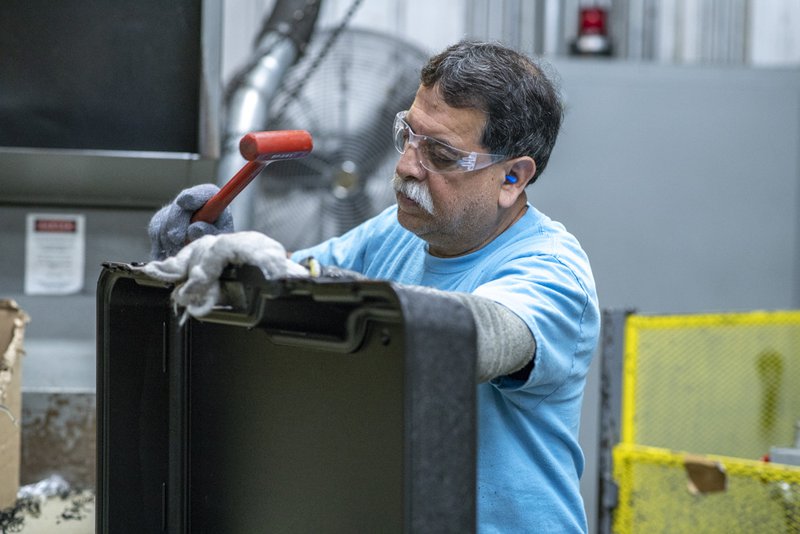
This ownership mindset serves as the cornerstone of reliable and consistent output, particularly within the manufacturing sector. While a detached worker might do only what is required and view quality as someone else’s duty, an engaged employee takes pride in the product as a manifestation of their own judgment, identifying and correcting issues long before they ever reach a client.
Such an environment does not appear overnight or by chance. Thoughtful leaders cultivate this dedication intentionally over time by establishing clear performance standards, fostering stable teams, and empowering individuals with genuine accountability.
The Impact of an Ownership Mindset on Custom Cases Quality Control
In manufacturing, quality control is frequently linked to inspection checkpoints and documentation. While these systems are vital, the most successful quality control occurs prior to any formal review. It takes place the moment an operator at the machine spots an issue and pauses to correct it.
Here is how a vested interest culture strengthens quality at every stage:
- Proactive problem-solving: Engaged employees anticipate issues rather than waiting for them to surface during inspection.
- Consistency across runs: When workers care about the outcome, quality does not fluctuate between shifts or between orders.
- Fewer costly errors: Catching a defect early in production is far less disruptive than addressing it after a customer receives the order.
- Attention to customization details: For products with specific interior configurations or branding requirements, careful hands-on attention ensures each detail is executed correctly.
This approach to quality is especially meaningful for OEMs. Their end users are counting on the case to protect equipment reliably throughout the product's lifecycle.
How Employee Investment Drives Customer Responsiveness
Communication is just as critical to overall quality as the physical product itself. In a custom project, a supplier's responsiveness during moments of clarification speaks volumes.
A culture that fosters product quality naturally produces responsive customer support. When team members are invested in client relationships, they remain dedicated from initial contact to the final shipment, keeping project details top of mind and consistently following through.
For an OEM, interacting with someone familiar with the manufacturing line is invaluable. They provide authentic, knowledgeable answers rather than generic scripts. Such professionals can proactively identify design concerns, recommend improvements, and maintain project momentum, all because they really care about the outcome.
Why Vested Interest Matters Even More for Custom Cases
Off-the-shelf products can tolerate a certain degree of detachment in production. A standard item has proven tolerances and a well-worn process. Custom work is different.
When a plastic case is designed with a specific interior configuration, every detail of that design has to be executed with precision. The interior is not an add-on; it is formed as an integrated part of the case itself. Getting that right requires a team that takes ownership at every step.
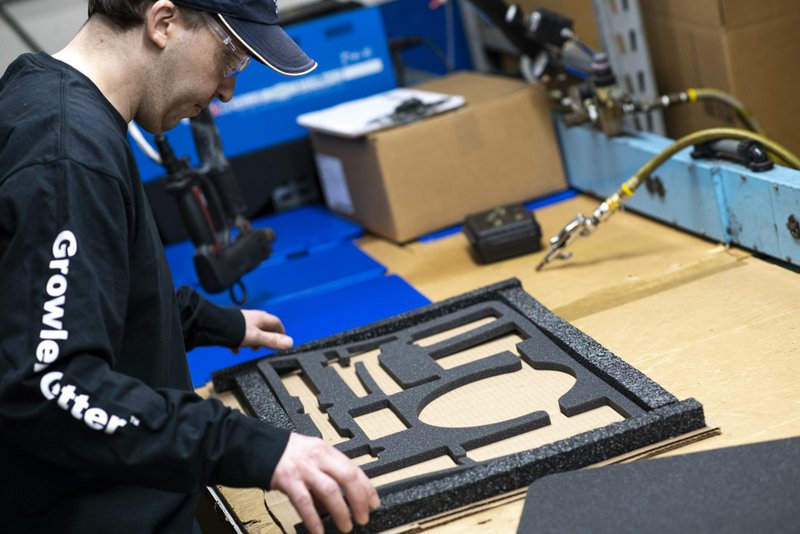
Custom work also tends to involve more back-and-forth with the customer. That communication needs to be clear, consistent, and technically informed. Without a workforce that is engaged, that process breaks down.
For OEMs who invest in purpose-built protection solutions, the quality of that process is inseparable from the quality of the final product. Both depend on people who are accountable.
Partner With a Team That Treats Your Case Like Their Own
An ESOP is not simply an employee benefit, it is real ownership, and it gives every PFC employee a stake in how well the company does. At The Plastic Forming Company, every one of our people understands that customer service is a shared responsibility. You can see it in how we strive to understand your needs, how we appreciate the critical importance of communicating accurate and timely information, and how we pay attention to the smallest details.
We design, engineer, and manufacture everything in-house, right here in the USA. Our custom cases are blow-molded with integrated interiors formed as part of the case itself, not added afterward. That level of integration demands precision, and precision demands people who care.
If your OEM operation requires a protective case partner with a deep level of commitment to your success, let’s chat about your custom case requirements today.