

Blog Post
Understanding the Blow Molding Cycle: From Raw Pellet to Protective Shell
Every durable plastic carrying case starts as a small raw material pellet. Understanding how that pellet becomes a finished, protective shell helps OEMs make more informed decisions about the cases they choose for their products. Blow molding is a highly controlled manufacturing process. Each stage of the cycle directly affects the structural integrity, fit, and long-term performance of the finished case. Here is a closer look at what happens from start to finish.
Stage 1: Preparing the Raw Material for Blow Molding
The process begins with plastic resin pellets. These are fed into an extruder, where heat and mechanical pressure melt them into a uniform, workable material.
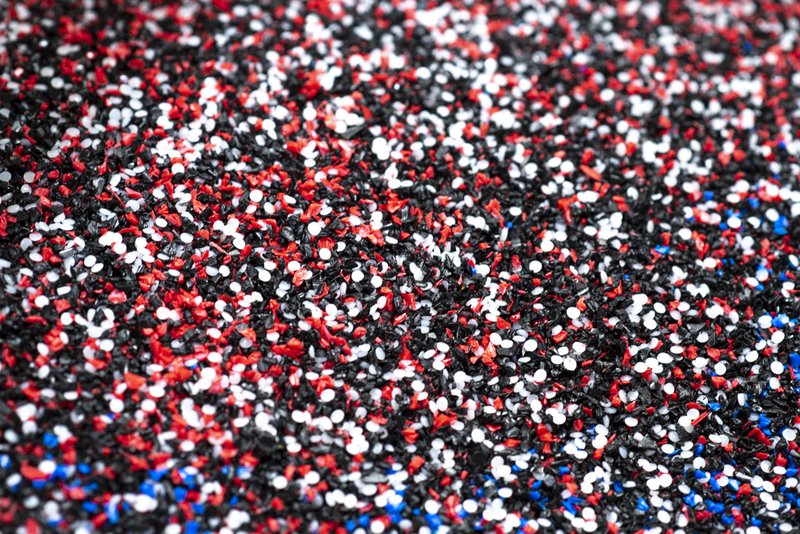
Temperature control at this stage is critical. Uneven heating leads to inconsistencies in wall thickness. Achieving the right melt temperature ensures a smooth, pliable parison, which is the hollow tube of melted plastic ready to be blown or molded into its final hollow shape.
The choice of resin also matters. The material must be strong enough to handle real-world stress but flexible enough to take shape cleanly inside the mold.
Stage 2: Forming the Parison and Closing the Mold
After extrusion, the parison is placed between two halves of a mold, which clamp shut around it to begin shaping the material.
Air is injected into the parison under controlled pressure. The plastic expands outward and presses against the interior walls of the mold. The mold's geometry determines the final shape, contours, and wall structure of the carrying case.
This stage is where double-wall construction comes to life. Through the blow molding process, a dual-walled structure naturally forms, providing the finished case with essential rigidity and impact resistance while avoiding the added weight of thick solid plastic.

Stage 3: Cooling and Solidifying the Shell
Once the plastic adapts to the contours of the mold, the cooling phase commences. Keeping the mold clamped shut during solidification allows for strict regulation of cooling duration, mitigating risks of warping, stress concentrations, or shrinkage.
Maintaining uniform cooling throughout the structure is critical, as localized thermal variations can introduce structural flaws or dimensional deviations. Rigorous thermal control throughout this step is what distinguishes a durable, consistent part from one susceptible to field failure.
A case achieves dimensional stability only after uniform, thorough cooling is complete. Accelerating this phase remains a primary driver of manufacturing defects in plastic blow molding.
Stage 4: Finishing, Trimming, and Quality Review
Once the case is ejected from the mold, excess plastic, known as flash, is trimmed away. Case engineers then inspect the product for dimensional accuracy, surface quality, and structural soundness.
This finishing stage also opens the door for additional customization such as:
- Foam
- Interior labels
- Foam lid pads
- Interior trays
- Custom cavity plates
- Metal latches
The Importance of Cycle Precision for OEMs
Understanding the blow molding cycle helps explain why not all plastic cases perform the same way. A case produced with tight process controls, consistent raw material sourcing, and careful mold engineering will outperform one that cuts corners at any stage.
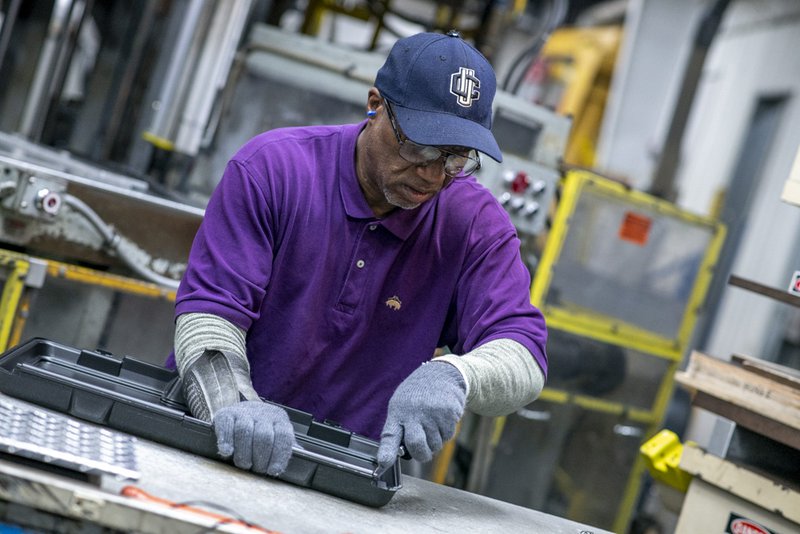
For OEMs, achieving this degree of precision provides clear operational advantages:
- Dimensional consistency: Cases hold the same measurements run after run, which matters when fitting interiors or integrating cases into a product line.
- Structural reliability: Controlled cooling and forming result in cases that resist impact and maintain their shape during transport and daily use.
- Interior compatibility: A precisely formed case allows for interiors, whether custom molded or layered foam, to fit exactly as designed.
- Branding accuracy: Molded logos and hot stamping hold detail better when the surface quality is consistent and uniform.
The Critical Need for Precision in Custom Blow Molding
Stock cases follow a standard mold. Custom blow molding introduces additional variables. The mold must account for product-specific shapes, hardware placements, and interior configurations. Each adjustment requires careful validation before a production run begins.
Here is what sets a well-executed custom blow molding program apart:
- Mold tooling designed with the product's end use in mind
- Consistent wall thickness maintained across complex geometries
- Integrated interior molding that becomes part of the case itself, not a separate insert
- Repeatable production results that hold up across small and large runs
Managing every variable with precision results in a case that protects its contents the same way every single time.
Ready to Optimize Your Product Protection?
At The Plastic Forming Company, every case we produce is manufactured entirely in-house, from engineering and mold design to final assembly. We have been refining our blow molding process since 1966, and our double-wall construction approach is built for real-world performance.
Unlike add-on inserts, our custom molded interiors are directly built into the case during fabrication. This integrated design lowers tooling expenses relative to full-custom molds while providing an exact fit for your equipment.
Ready to optimize your product protection? Contact us to discuss your custom blow molding needs.