

Blog Post
Understanding Double-Wall Construction for Plastic Cases
For OEMs and product manufacturers, double-wall construction is more than a technical specification; it is the engineering foundation of product reliability. This design provides a definitive advantage by directly addressing how a case survives the rigors of real-world use.
A high-quality carrying case is a constant companion to your product throughout its entire lifecycle. It must endure heavy handling on production floors, the turbulence of transit, and repeated access in the field. By understanding the mechanics of case construction, teams can move beyond guesswork and make informed decisions about the level of protection their equipment truly requires.
What Double-Wall Construction Actually Means
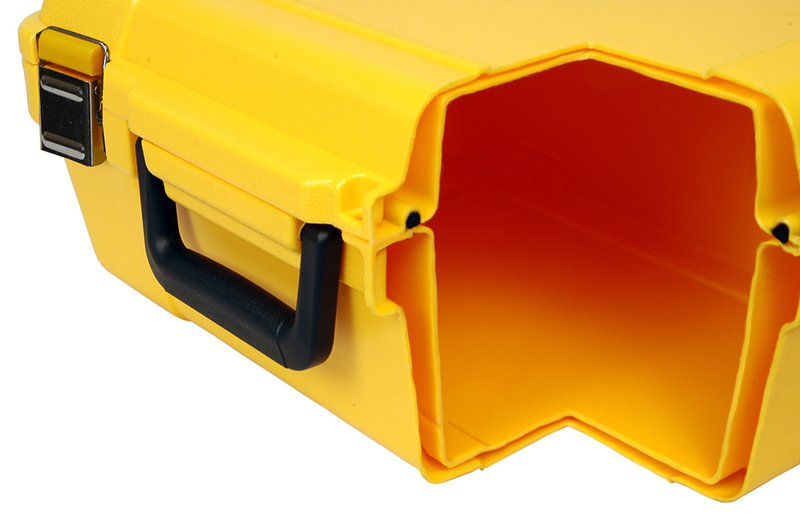
Double-wall blow molding is a specialized manufacturing process used to create high-performance custom plastic cases that are exceptionally rugged yet lightweight. Unlike standard single-wall injection molding, this process creates a part with two distinct layers of plastic separated by an insulating air pocket.
The Mechanics of the Process
In the custom blow molding process, a molten tube of plastic resin, known as a parison, is dropped between two mold halves. As the mold closes, compressed air is blown into the parison, forcing the plastic to expand and take the shape of the mold cavities. In double-wall construction, the mold is designed so that the plastic forms both an outer shell (the exterior of the case) and an inner liner (the interior wall) simultaneously.
Structural Benefits
The primary advantage of this design is the air chamber created between the walls. This gap acts as a natural shock absorber; when the case is dropped or struck, the outer wall can flex slightly into the air space without transferring the impact directly to the delicate equipment stored inside. Additionally:
- Crush Resistance: The two walls provide structural integrity that far exceeds the sum of their parts.
- Thermal Insulation: The trapped air provides a buffer against extreme temperature fluctuations.
- Integrated Features: Manufacturers can "tack" the two walls together in specific spots to create molded-in slots for dividers, hinges, and latches without needing secondary assembly.
Aesthetics and Customization
From a design perspective, double-wall construction allows for a "finished" look on both the inside and outside of the case. Since the interior wall is molded at the same time as the exterior, custom cavities can be shaped to cradle specific tools or medical instruments perfectly. This eliminates the need for expensive fabric liners or heavy foam inserts in many applications, resulting in a professional, uniform, and incredibly durable housing solution.
How the Air Cavity Dissipates Kinetic Energy
When a case takes a drop, kinetic energy travels into the outer wall on impact. From there, the sealed air cavity becomes an active part of the protection system.
Trapped air compresses under the incoming force. That compression slows the rate of energy transfer toward the inner wall. The force spreads across a wider surface area rather than concentrating at a single point of contact. The inner wall receives a significantly reduced portion of the original impact.
This is the air-cushioning effect that double-wall plastic blow molding creates. The process requires no added material to achieve it. Instead, the design builds the engineering directly into the structure itself.
Double-Wall Blow-Molded Cases Versus Other Construction Methods
It helps to understand what other construction approaches look like in practice. The structural differences affect how a case performs when conditions get rough.
Plastic blow molding allows for consistent, precise wall thickness across the entire case. That uniformity eliminates thin areas where stress tends to concentrate and cause failure over time.
The material also plays a meaningful role. Blow-molded plastic is softer and more rounded compared to rigid injection-molded plastic. On impact, the wall absorbs force by giving slightly rather than channeling it straight through.

Here is a comparison of the primary construction options:
- Injection-molded cases: These plastic cases feature rigid, solid walls with no air cavity. Impact force transfers more directly through the structure with little energy dissipation along the way.
- Single-wall constructions: These cases have no sealed cavity between walls. Any cushioning must come from external foam or padding rather than the case structure itself. This can make the case much heavier.
- Double-wall blow-molded cases: These feature a sealed air cavity between two walls. Impact energy is absorbed and redistributed through a graduated process before it ever reaches the contents
The double-wall approach builds protection into the case from the outset. Foam interiors can be added for specific product requirements, but the base case already manages external impact on its own terms.
Put Double-Wall Engineering to Work for Your Product
At The Plastic Forming Company, double-wall blow-molded construction is the foundation of our custom case range. Our custom molded interiors are seamlessly integrated into the case during production, forming part of the case itself. For products that need an additional layer of graduated protection, our foam interiors use multiple-density layers that work progressively to absorb force.
PFC handles the entire production lifecycle in-house—from 3D part scanning and engineering to final production. Everything is made at our own US facility, allowing strict quality control and swift lead times.
If you're evaluating case options for your product line, we'd love to walk you through the construction process. Contact us today and let's find the right fit for your equipment.